96
All movies
Advertising
Animal world
Architecture
Army
Art and culture
Aviation
Biography
Catastrophes
Charity
Children
Cinematograph
Circus
Cosmos
Crime
Dance
Ecology
Economy
Educational
Emigration
Ethnography
Fashion
Food
For kids
History
Holokost
Human rights
In other languages
LGBT
Lifestyle
Literature
Media
Medicine
Museums
Music
Mysticism
Nature
Painting
Pandemiya
People with special needs
Perestroyka
Philosophy
Photo
Politics
Pop music
Portrait
Propaganda
Psychology
Religion
School
Science
Self-portrait
Sex
Show
Silent film
Sport
Technologies
Television
Terrorism
Theater
Travel
Video art
Village
Volunteering
War
Women
Filters
ArtdocMedia rating
Year of release
Country of production:
Production studio
Genre
Historical period
Country of action
City of action
Language
Subtitles
Festival
Funding
Sort by:
rating
from new to old
from old to new
from A to Z
from Z to A
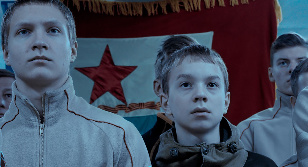
The film reveals the mechanism that entices human beings to voluntarily turn themselves into submissive, faceless creatures. Thus, they become a resource to be used by the state – a grey lump of ore oblivious to the innate value of their individual life. The town of Apatity first came into being as a concentration camp. Today, 50 years is considered a ripe old age in the industrial town of Apatity, while the environment is at the brink of an ecological disaster. The adults while away their lives at the factory bus stop whilst the children – the token of their immortality – miss out on family life and warmth. Instead, they are left in the care of state structures that inculcate in them the traits of prisoners, making use of celebration-like dancing and marching trainings. Neither the children nor their educators are aware of this. They are convinced that they are bringing up a generation of patriotic heroes, fated to become legionnaires of the Earth and the adjacent cosmic expanses. The only way out of this system is death. However, if you die for the state you become an immortal hero. The dancing and marching fall into the conveyor-belt rhythm of the moving trains, full of grey lumps of ore that are also destined for immortality: they will become phosphorus fertiliser on which new life will grow. Film website: https://immortal.ee
10

Estonia, Latvia, 2019
60 min
English
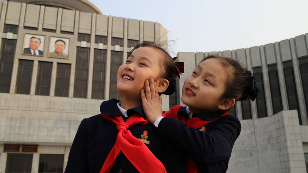
A documentary about the life of an eight-year-old schoolgirl Gin-mi in Pyongyang, the capital of the DPRK, shot by a Russian filmmaker in a script written by North Korean comrades.
10
Russia, Germany, Latvia, Czechia, North Korea, 2015
106 min
English
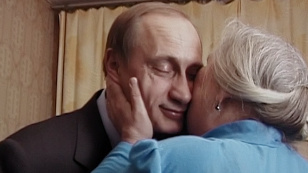
The events of the film begin on December 31, 1999 when Russia was acquainted with its new president. The film is based on unique and strictly documentary testimonies of the true causes and consequences of the operation "successor", as a result of which Russia ended up with the president who still rules the country. The protagonists of the film are Mikhail Gorbachev, Boris Yeltsin, Vladimir Putin, and the Russian nation, as always being a silent witness of its own destiny.
Internet-premiere of the film took place on the 12th December 2018 at the Artdoc.Media online movie theatre.
Internet-premiere of the film took place on the 12th December 2018 at the Artdoc.Media online movie theatre.
10
Switzerland, Latvia, Czechia, 2018
104 min
English
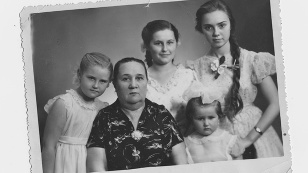
The history of a family. The history of the country. Ukraine 2014–2015. Director of the movie, Vitaly Mansky, was born in Ukraine, and, after finishing his studies in VGIK, he lived and worked in Moscow. His family still lives in Ukraine, and because of the Russian-Ukrainian military conflict, his family members had to make a choice, which resulted in some of them becoming sworn enemies. This film reveals different aspects of the conflict, focusing on the situations faced by an “ordinary” person, as well as examining different views of the world, so that the spectator can look deeper into the roots of these tragic events. At the same time, the interviews made by the director – conversations with relatives –reveal the feelings and views of these people but also provide an insight into the history of Ukraine and preconditions of this conflict. The film shows how the conflict caused hatred among the citizens of the same country. Close Relations is the most personal movie made by Vitaly Mansky.
10
Estonia, Germany, Ukraine, Latvia, 2016
112 min
Russian, English
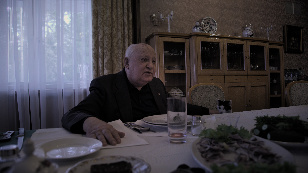
"Gorbachev. Heaven" is a documentary film about changes that reverberated throughout the world wrought by one man. A film summing-up the life of a man who changed the world in the 20th century. Gorbachev’s short time in power was marked by the collapse of this empire. He was the architect of Glasnost and Perestroika, policies that gave the citizens of the Soviet Union – what Ronald Reagan called “the Evil Empire” – a chance to be free. He tore down the Berlin Wall. But at the same time, under his rule, the Chernobyl nuclear facility exploded and its destruction was concealed. Citizens demanding independence in the Baltic states died. Soldiers wielding shovels brutally suppressed protesters in Tbilisi. And Soviet tanks menaced, and killed, peaceful demonstrators in Baku. The Soviet empire collapsed under him – and he is condemned by his own people. With this burden of the past, this lonely old man is living the last days of his life in an empty house in the suburbs near Moscow.
Detailed information about the film, reviews, articles, interviews and photos are available on the official website of Vitaly Mansky Manski-doc.com.
Detailed information about the film, reviews, articles, interviews and photos are available on the official website of Vitaly Mansky Manski-doc.com.
10
Latvia, Czechia, 2020
100 min
English
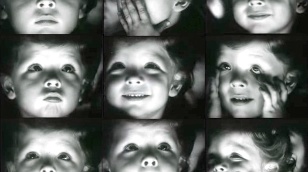
This film was shot without a single cut, hidden camera in the Puppet Theater. For 10 minutes, the child watches the performance and the whole gamut of feelings is reflected on his face, from jubilation to absolute horror. In just 10 minutes of an ordinary theatrical performance, a 5-year-old boy gains a huge life experience...
An absolute classic of non-fiction films.
10
USSR, Latvia, 1978
10 min
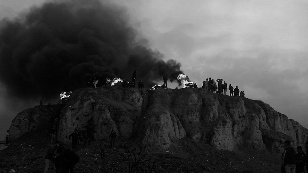
The film takes the audience on a powerful, visually arresting journey through humanity’s endless cycle of war and peace. The film follows 20-year-old Andriy Suleyman as he tries to secure a sustainable future while navigating the human toll of an armed conflict. From the Syrian civil war to strife in Ukraine, Andriy’s existence is framed by the seemingly eternal flow of life and death.
10
Germany, Ukraine, Latvia, 2020
104 min
English
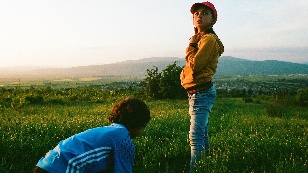
The film focuses around Ina and Nikoloz, eleven and ten years old Georgian children who live in the 2008 Georgia-Russia war refugee village Tserovani. Unlike troubled adults who long for their old homes, the children are oblivious of the past. As they find fun and scary pastimes around the village, they try to reconstruct memories of their past, of where they came from. They don’t remember the war, but it continues to affect their present and future.
10
Latvia, 2020
60 min
English, Latvian
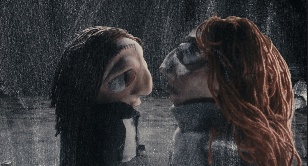
Walking through the streets of Riga, you meet all kinds of people, some may support Russia’s aggression in Ukraine. Depending on where and when you are, these people could be on every corner in the city center. But you also come across those who are ready to resist a possible invasion. Some are more hesitant, others more confident. Do we all - friends, acquaintances, strangers - share the same values? Or are we sometimes interacting with people driven by hatred or completely different beliefs to ours?
A passionate defender of Ukraine might find love in Riga, but her thoughts are still consumed by the war she escaped. She’s caught between fighting the enemy and struggling with her own emotions. How can you love someone who might be your enemy? Is it possible to heal from the pain of war, or to escape the grip of grief and anger?
This immersive cinematic experience, filmed in one-shot, blends documentary, theatre, fiction, and music, creating a powerful, multi-layered journey. It takes us through a flow of emotions, connecting the past and present, and even finding moments of hope and freedom in the midst of tragedy. It’s an opportunity to explore the emotional impact of war, personal struggle, and the possibility of healing.
9
Latvia, 2025
71 min
English
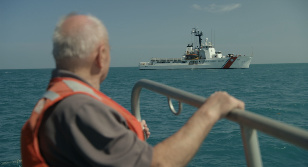
Through rare archival footage and a dramatic first-person re-enactment of one of the biggest Cold War muddles of the 1970s, Lithuanian sailor Simas Kudirka tells the tale of his desperate jump to freedom.
9
France, Latvia, Lithuania, 2020
85 min
English
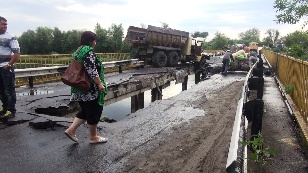
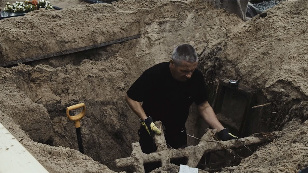
Gravediggers prepare a lifelong home for us all. They do their work by standing over people when they are in grief and are the last hands to touch the grave towel that lowers the deceased a meter and a half below the ground. Alongside other ancient professions, gravediggers have inherited knowledge and skills through several generations - not only in digging holes but also in Latvia's rich cemetery culture, where everything has its order. Latvia's cemeteries are where traditions from different centuries meet, and every gravedigger needs to know them so that he or she can continue to receive the stamps for the job of digging graves. The most experienced of them have already received 5 000 such stamps, which is equivalent to the population of one town in Latvia.
9
Latvia, 2023
30 min
English
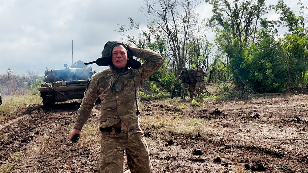
On 24 February 2022, Yevhen, together with his friends, volunteered to join the first aid battalion on the front line. They provided life-saving support and evacuation of the injured. This film reveals the experiences of these young men over six months full of drama, despair, fear, hatred, bitterness, love, and, most importantly, faith in victory.
As they left for the front, they sent their families to the rear – to a village in western Ukraine. All of them come to this idyllic place for a couple of days to baptise the nine-month-old son of one of our protagonists. As soon as they rise from the celebratory feast, they have to go back to the front…
Part of the money taken from the sale of tickets will be used for medical evacuation vehicles.
Part of the money taken from the sale of tickets will be used for medical evacuation vehicles.
9
Ukraine, USA, Latvia, Czechia, 2023
98 min
English
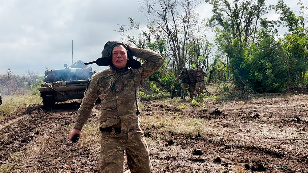
2022. gada 24. februārī Jevhens kopā ar draugiem atgriezās frontes neatliekamās medicīniskās palīdzības brīvprātīgo bataljonā, kurā viņi dienē kopš 2014. gada, sniedzot pirmo palīdzību un nodrošinot ievainoto evakuāciju no frontes līnijas. Filma atsedz kara pirmajā pusgadā pieredzēto – seši mēneši, kurus caurvij drāma, izmisums, bailes, naids, rūgtums, mīlestība un galvenais – ticība uzvarai.
Dodoties uz fronti, filmas varoņi aizsūtīja savas ģimenes uz ciemu Ukrainas rietumos. 2022. gada augustā viņi visi uz pāris dienām tiekas šajā idilliskajā vietā, lai nokristītu viena filmas varoņa deviņus mēnešus veco dēlu. Tieši no svinību mielasta puišiem jādodas atpakaļ uz fronti…
9
Ukraine, USA, Latvia, Czechia, 2023
98 min
Latvian
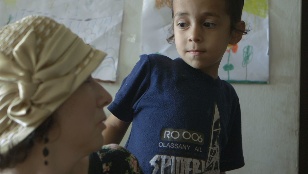
This is a story about how to overcome fear, change your life forever. This is the love story of a man and a woman doomed to eternal separation. And children who will always bear the seal of what their parents did. The main action of the film takes place in Israel, from 1995 to the present day. Before us is a drama of life, death, hate and love. The film was awarded the National Lavr Prize - 2014 as the Best Film and the White Elephant Award of the Russian Guild of Film Critics and Critics - 2015 as the Best Non-Fiction Film. This tape was the last work of the great Hertz Frank. After his departure, the film was completed by Maria Kravchenko.
9
Russia, Latvia, 2014
89 min
Russian
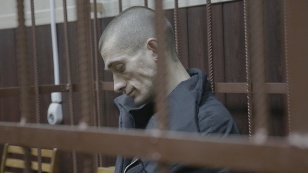
Petr Pavlensky, artist and activist, is in the vanguard of forging social change in Russia. Through an array of courageous performances, he acts as society's conscience in the face of an increasingly totalitarian state. From lying naked in a coil of barbed wire, to nailing his scrotum to the floor of Red Square, his acts of defiance aim to spark debate and catalyse reform.
9
Russia, Latvia, 2016
74 min
English
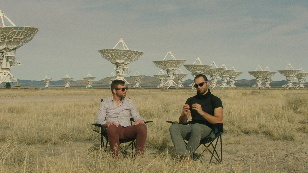
Astronomers, through telescopes, and slime mold explorers, through microscopes, each in their own way, discover a mysterious pattern that repeats across every scale of the universe.
8
Estonia, Latvia, 2024
17 min
English
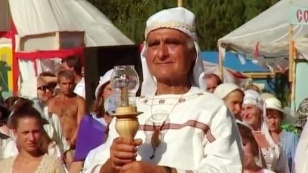
In the remote Siberian taiga, the followers of the former policeman Sergei Torop, who declared himself the new Christ, the so-called Vissarionites, are waiting for the end of the world and are preparing themselves and their children for life in a new civilization. Are they all sincerely glad that they left their former life?
8
Russia, Latvia, 2002
44 min
Latvian
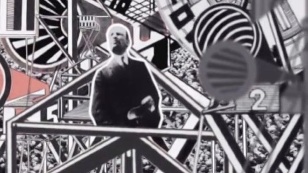
The film, directed by Peteris Krilov, is a private look at the life of the artist Gustav Klutsis, one of the leading representatives of the Russian avant-garde art of the early 20th century, whose life drama reflected the tragedy of the entire nation during the Stalinist repressions. This is a story about the ambition, hope, love and responsibility of the artist, which he continues to bear even after his death.
8
Latvia, 2008
90 min
1
2
3
4
5