520
All movies
Advertising
Animal world
Architecture
Army
Art and culture
Aviation
Biography
Catastrophes
Charity
Children
Cinematograph
Circus
Cosmos
Crime
Dance
Ecology
Economy
Educational
Emigration
Ethnography
Fashion
Food
For kids
History
Holokost
Human rights
In other languages
LGBT
Lifestyle
Literature
Media
Medicine
Museums
Music
Mysticism
Nature
Painting
Pandemiya
People with special needs
Perestroyka
Philosophy
Photo
Politics
Pop music
Portrait
Propaganda
Psychology
Religion
School
Science
Self-portrait
Sex
Show
Silent film
Sport
Technologies
Television
Terrorism
Theater
Travel
Video art
Village
Volunteering
War
Women
Filters
ArtdocMedia rating
Year of release
Country of production
Production studio
Genre
Historical period
Country of action
City of action
Language
Subtitles
Festival
Funding
Sort by:
rating
from new to old
from old to new
from A to Z
from Z to A
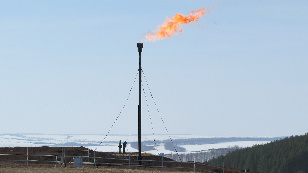
A film about modern Europe. About its two edges, or, more correctly, extremes. About Europe, which begins in the deserted space of Russian Siberia and ends on the cozy beaches of the Bay of Biscay, where even the laws of nature form fundamentally different styles of human existence. What can unite such different lives? Physically, they are united by the Western Siberia–Western Europe gas pipeline. The pipe not only connected, but also inextricably linked THIS Russia with THIS Europe. The film was awarded the National Film Award "Nika" - 2014, nomination Best Non-Fiction Film.
10

Russia, Germany, Czechia, 2013
116 min
English
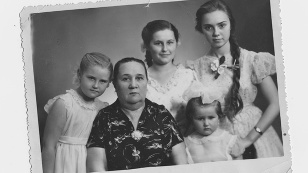
The history of a family. The history of the country. Ukraine 2014–2015. Director of the movie, Vitaly Mansky, was born in Ukraine, and, after finishing his studies in VGIK, he lived and worked in Moscow. His family still lives in Ukraine, and because of the Russian-Ukrainian military conflict, his family members had to make a choice, which resulted in some of them becoming sworn enemies. This film reveals different aspects of the conflict, focusing on the situations faced by an “ordinary” person, as well as examining different views of the world, so that the spectator can look deeper into the roots of these tragic events. At the same time, the interviews made by the director – conversations with relatives –reveal the feelings and views of these people but also provide an insight into the history of Ukraine and preconditions of this conflict. The film shows how the conflict caused hatred among the citizens of the same country. Close Relations is the most personal movie made by Vitaly Mansky.
10
Estonia, Germany, Ukraine, Latvia, 2016
112 min
Russian, English
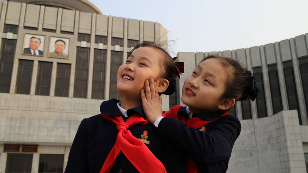
A documentary about the life of an eight-year-old schoolgirl Gin-mi in Pyongyang, the capital of the DPRK, shot by a Russian filmmaker in a script written by North Korean comrades.
10
Russia, Germany, Latvia, Czechia, North Korea, 2015
106 min
English
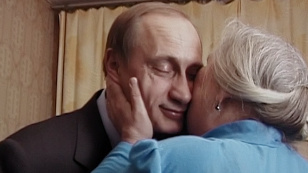
The events of the film begin on December 31, 1999 when Russia was acquainted with its new president. The film is based on unique and strictly documentary testimonies of the true causes and consequences of the operation "successor", as a result of which Russia ended up with the president who still rules the country. The protagonists of the film are Mikhail Gorbachev, Boris Yeltsin, Vladimir Putin, and the Russian nation, as always being a silent witness of its own destiny.
Internet-premiere of the film took place on the 12th December 2018 at the Artdoc.Media online movie theatre.
Internet-premiere of the film took place on the 12th December 2018 at the Artdoc.Media online movie theatre.
10
Switzerland, Latvia, Czechia, 2018
104 min
English
"Gorbachev. Heaven" is a documentary film about changes that reverberated throughout the world wrought by one man. A film summing-up the life of a man who changed the world in the 20th century. Gorbachev’s short time in power was marked by the collapse of this empire. He was the architect of Glasnost and Perestroika, policies that gave the citizens of the Soviet Union – what Ronald Reagan called “the Evil Empire” – a chance to be free. He tore down the Berlin Wall. But at the same time, under his rule, the Chernobyl nuclear facility exploded and its destruction was concealed. Citizens demanding independence in the Baltic states died. Soldiers wielding shovels brutally suppressed protesters in Tbilisi. And Soviet tanks menaced, and killed, peaceful demonstrators in Baku. The Soviet empire collapsed under him – and he is condemned by his own people. With this burden of the past, this lonely old man is living the last days of his life in an empty house in the suburbs near Moscow.
Detailed information about the film, reviews, articles, interviews and photos are available on the official website of Vitaly Mansky Manski-doc.com.
Detailed information about the film, reviews, articles, interviews and photos are available on the official website of Vitaly Mansky Manski-doc.com.
10
Latvia, Czechia, 2020
100 min
English
The acclaimed documentary ALMOST HOLY tells the story of Gennadiy Mohknenko, a Ukrainian pastor who has taken up the fight against child homelessness by forcibly abducting street kids and bringing them to his private rehabilitation center. Gennadiy's ongoing efforts and unabashedly tough love approach to his city's problems has made him a folk hero to some, and a lawless vigilante to others. Using gripping footage that follows the self-appointed savior's mission over the course of fifteen years, interspersing imagery from a popular Soviet animated TV show; ALMOST HOLY is a bold and captivating portrait of a man fighting to change Ukraine for the better, as its place in a tense political landscape hangs in the balance.
10
USA, 2015
97 min
English

This film is about the Solovetsky Special Purpose Camp (SLON), one of the many Gulag zones scattered around the country. Used documents and film materials of the 1920-30s. The film features former prisoners of Soviet camps: Dmitry Likhachev, Efim Lagutin, Oleg Volkov, Zoya Marchenko, Olga Adamova-Sliozberg, Anatoly Gorelov and others.
10
USSR, 1988
87 min
A film about the life, games and everyday life of a 7-year-old girl from a dysfunctional family living in a forest near a big city. And, as little Milana finds out, from a normal life.
10
Russia, 2011
57 min
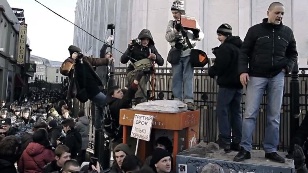
Over the past year, Sergei Udaltsov, coordinator of the Left Front opposition movement, spent more than two months under arrest. In prison, he declared dry hunger strikes in protest against illegal detentions at rallies, on the way to rallies, just on the street. Many times he was hospitalized due to deterioration of health during hunger strikes. But this most controversial leader of the Russian opposition is surrounded by people almost more mysterious than himself. What leads them, following Udaltsov to rallies, under the batons of riot police, venturing on hunger strikes and ready to jump from the Crimean bridge?
9
Russia, 2012
60 min
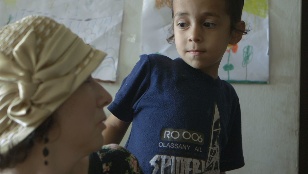
This is a story about how to overcome fear, change your life forever. This is the love story of a man and a woman doomed to eternal separation. And children who will always bear the seal of what their parents did. The main action of the film takes place in Israel, from 1995 to the present day. Before us is a drama of life, death, hate and love. The film was awarded the National Lavr Prize - 2014 as the Best Film and the White Elephant Award of the Russian Guild of Film Critics and Critics - 2015 as the Best Non-Fiction Film. This tape was the last work of the great Hertz Frank. After his departure, the film was completed by Maria Kravchenko.
9
Russia, Latvia, 2014
89 min
Russian
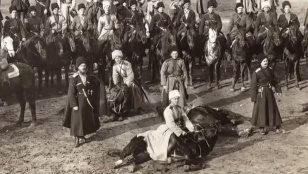
History of the twentieth century. View from the village. The path of the Russian peasantry in time and space from pre-revolutionary Cossack villages and rich Siberian villages to the taiga Ural villages, to the peasant Gulag, with children and the elderly, to certain death. The authors of the documentary trace this tragic Odyssey from the manifesto of 1861 to the beginning of the Great Patriotic War. They offer society a different view of both the pre-revolutionary Russian village and the civil war, which, in their opinion, was not a war of some reds with some whites, but a war of the state against the peasantry, with its people, because the peasants at that moment made up 80 percent of the population. What was behind this unprecedented attempt in history to destroy 10 million of the best, most talented people of the village?
9
Russia, 2013
104 min
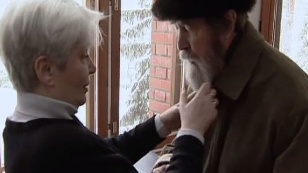
Alexander Isaevich Solzhenitsyn. Actor Yevgeny Mironov shares his memories of meetings with him. Solzhenitsyn's friend Nikita Struve tells how he published The Gulag Archipelago abroad. The widow, Natalya Dmitrievna Solzhenitsyna, tells about the last days of his life, thoughts, goals and plans of Alexander Isaevich. The authors of the film offer rare shots of foreign chronicles and exclusive interviews of Alexander Isaevich, which have not been published so far.
9
Russia, 2008
56 min
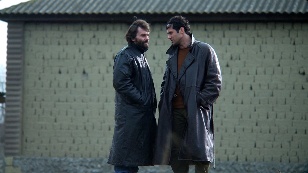
The video of the execution appeared online immediately after the brutal murder of two migrants. Moreover, while the Russian law enforcement agencies showed a strange apathy in the investigation, the Nazis quite frankly took responsibility for it. In this situation, an Israeli director penetrates under the guise of a sympathizer into the darkest nooks and crannies of the fascist underground in order to find and expose the killers. However, the result, the documentary thriller Credit for a Kill, paints an ominous picture: many unsolved hate crimes committed in Russia go unpunished, perhaps precisely because they were committed with the assistance of the authorities.
9
Israel, 2016
87 min
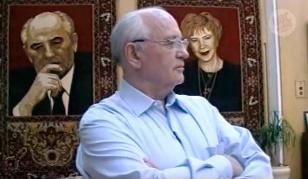
The film is dedicated to the first and last president of the Soviet Union, Nobel laureate Mikhail Gorbachev. The film was shot in Moscow, Berlin and Rome, at a reception with the Pope in the Vatican and in the homeland of Gorbachev in the Stavropol Territory.
9
Russia, 2001
104 min
With the assassination in 1948 by state security officers of the head of the Jewish Anti-Fascist Committee, Solomon Mikhoels, new times begin in the relationship between the Soviet government and Jews. The liquidation of the JAC, the execution of its activists, and the campaign against the "rootless cosmopolitans" form a new state anti-Semitism. The death of Stalin will cancel the massacre, but the former official Russian-Jewish harmony under socialism will no longer be restored. Popularly known superstars have not diminished: Botvinnik is the main chess player, Raikin is the main comedian, Plisetskaya is the main ballerina, Galich and Vysotsky are the main bards, many famous names in various fields, from nuclear physics to light music. But Jews have ceased to be co-authors of Russian communism. And they are no longer allowed into politics, and they themselves are especially actively engaged in "anti-Soviet activities." Without the Jews, the shadow economy is unimaginable, or rather “illegal business”, for which death sentences have been handed down since the early 1960s. And from the middle of the decade, the dissident movement begins to shake the system; the grandchildren of Jewish revolutionaries bring into it the same ardor and fearlessness that their grandfathers did in the overthrow of tsarism. Allowing Jewish emigration in the 1970s makes nationality a means of rejecting socialism and will prove to be a more frequent reason for leaving than the opportunity to reverse one's Russian assimilation. Finally, the collapse of the USSR will put an end to the "Jewish question" in the form in which the last Soviet generations found it.
9
Russia, 2017
126 min
English, Hebrew
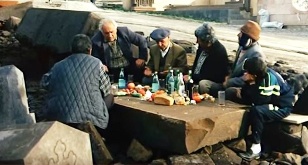
The earthquake began on December 7, 1988. No one could yet understand what had happened, but suddenly, at one moment, the telephone connection of the Armenian capital with Leninakan, Spitak and a number of other small towns and villages was interrupted. The entire north of Armenia has practically fallen silent, and this is 40 percent of the entire territory of the republic with a population of one million people. This film is about the life of ordinary people 13 years after a terrible disaster.
9
Russia, 2002
92 min
Russian
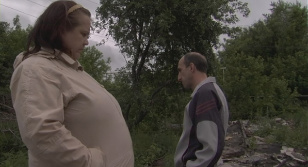
A story about a family that lives in a ghost town. 15 years ago there was a job and a happy life. After the closure of the mine, only old barracks, mountains of processed earth and unnecessary people who have lost the meaning of life remained. Is it possible to survive in such conditions and not sink even lower when all moral boundaries are erased? Have these people's hopes for happiness been shattered? And is there a place for a holiday, a dream, love in a hopeless reality?
9
Russia, 2010
62 min
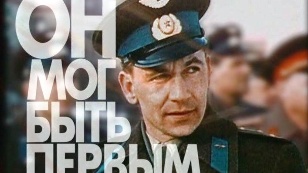
The film is dedicated to the dramatic fate of cosmonaut Grigory Nelyubov. He was the second understudy of Yuri Gagarin, had a certificate of cosmonaut number 3. But he never flew into space. Moreover, after the forced separation from the cosmonaut corps, Nelyubov's life was tragically cut short.
9
Russia, 2007
44 min
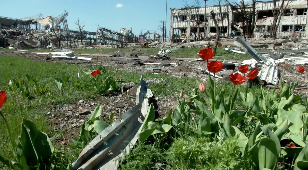
The battle for Donetsk Airport (May 2014 - January 2015) through the warriors's eyes of both sides.
The humans behind the battle.
The Donetsk Airport, Ukraine. Rebuilt in 2012, but now a scene of utter devastation - shortly after Russian-backed separatists have taken it over. Weaving together the voices of fighters on both sides supported by battle video, we tell an unvarnished story of war through the eyes of those who were there. The desperate fight for an airport whose capture seems more symbolic than strategic, they also show how human nature can adapt - in sometimes disturbing ways - when one's life is on the line.
9
USA, 2015
36 min
English
1
2
3
...
26